Coastal Wall Art That Actually Looks Good: A Guide to Ocean Photography in the Home
Generic beach prints are everywhere. Fine art photography is different. Here is how to use it.
Most coastal wall art looks like what it is: something bought to fill a wall with a beach on it. Recognizable, inoffensive, and forgettable after about two weeks of living with it.
Photography is a different category entirely. A photograph of the Oregon coast at low tide captures something real: the flatness of the water, the gray light, the particular stillness of a beach at dawn. Your brain processes that image as a real place. There is depth there, distance, and quiet. That response is automatic. The frame does not need to be large or expensive to produce it.
Generic beach wall art does not do this. It signals "beach." Photography shows you one.
Why Photography Makes Better Coastal Wall Art
The difference comes down to specificity. Fine art photography prints of coastal subjects are specific about light, atmosphere, and time of day. A photograph taken at a specific cove at a specific morning in particular fog is not repeatable. That specificity is what creates genuine feeling rather than decoration.
Illustrated or digitally painted coastal art tends to show you an idea of the ocean. Photography shows you the ocean. The distinction sounds abstract until you hang both versions in the same room and notice that one holds your attention a week later and the other has become invisible.
It is also worth saying: specificity is what lets coastal photography work in spaces that have nothing to do with the coast. A room in Chicago or London does not need to reference beach culture to benefit from a photograph of the Pacific at dusk. What it benefits from is a real image of a vast, quiet space. That is a separate thing.
Where Coastal Art Actually Belongs (Not Just Beach Houses)
Beach houses and coastal bathrooms: obvious. But this is where coastal wall art gets unnecessarily limited.
Urban living rooms are the most underrated location for ocean photography. A wide-format seascape on the main wall of a city apartment does something architecturally that almost nothing else can: it gives the eye somewhere to go. The image creates spatial depth the room does not provide. That experience is genuinely calming in enclosed spaces, and it has nothing to do with beach decor.
Home offices. Genuinely. When you are stuck at a desk, having a horizon somewhere in your sightline helps more than most people expect. Humans are wired to look at distant views when processing information. A quality photograph of a coastline gives the brain that release without requiring a window. It sounds like a small thing. It is not a small thing.
Bedrooms are a natural fit because soft coastal photography, misty mornings, quiet beaches, fog lifting off calm water, reads as inherently restful. The scale and stillness it depicts are the opposite of what most people deal with during the day. Our guide on designing a home that breathes covers the psychology of this in more depth.
One honest failure mode: small bathrooms with busy tile patterns. The photography gets lost. If you are hanging coastal art in a bathroom, the wall behind it should be simple and the piece substantial. A 16x20 print in a cluttered powder room will not read as designed. A 24x30 on a plain wall will.
Color or Black and White: The Choice Most People Get Wrong
The default instinct is color, because color coastal art is immediately accessible: warm sunset, vivid blue water, gold sand. It lands fast. It also starts to look like a hotel room faster than most people anticipate.
Color coastal photography works when the image captures something specific and atmospheric. Storm light over gray water. The particular blue-green of a Pacific cove is flat overcast. Dense fog burning off a New England harbor at sunrise. These images have enough going on that they hold up over time. A generic saturated sunset does not.
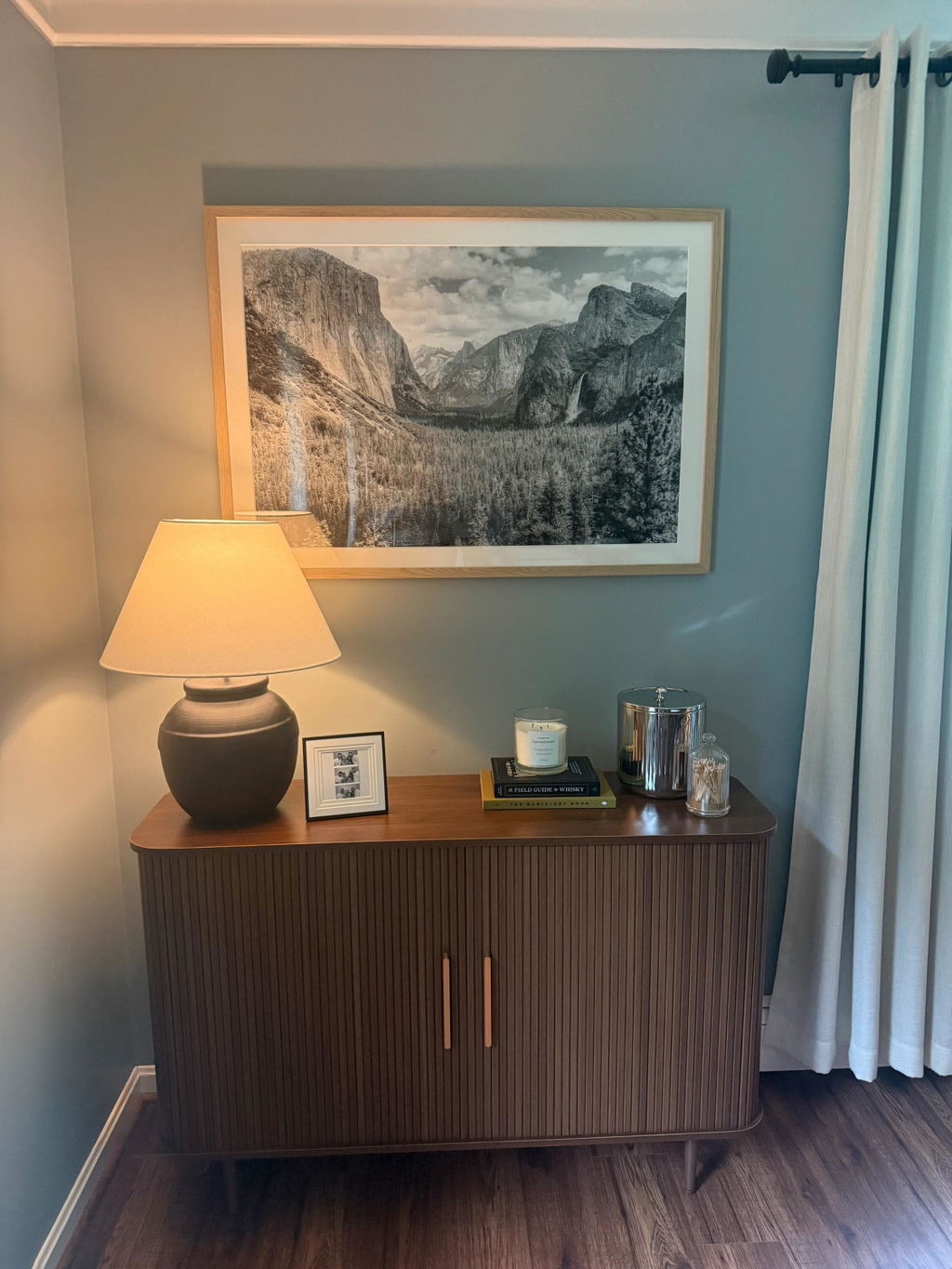
Black and white wall art from coastal subjects is a different proposition. Strip color from ocean photography and you are left with texture, form, and light: wave patterns, the horizon line, the weight of a sky meeting water. This version is more architectural and more flexible than color. It works in rooms that would look too "beach-themed" with color coastal art, including urban living rooms, home offices, and spaces with warm wood tones that would clash with blue-toned color photography.
Browse black and white wall art if you want to see how much range exists within this category. Coastal black and white is not a single look.
The practical answer: color coastal art for spaces where warmth and familiarity matter most (bedrooms, reading corners, family rooms). Black and white coastal photography for spaces that need the feeling of the ocean without the aesthetic of being at the beach. You can mix both, but match frame finishes if you do.
Sizing, Pairing, and What to Actually Buy
The single large print is the simplest answer for focal walls, and usually the right one. A wide horizontal image (seascape, coastline, horizon line) fills the wall the way vertical prints do not. The proportions of the ocean are horizontal. A 24x36 or 30x40 piece works for most living room walls. Go bigger if the wall is wide. The piece that looks like too much on a product page will almost always feel right in the actual space.
For hallways and secondary walls, a set of 2 wall art pieces in a clean horizontal pair works well with coastal subjects. Two photographs from the same coastline, same tonal grade, different moments. Matching frames, consistent spacing. The eye reads the pair as a single designed choice rather than two separate ones. The trick is related images rather than identical: same vantage point, different light or tide.
Wider walls (above long sofas, in open-plan spaces) are where wall art sets of three or more pieces earn their place. A triptych of related coastal images in matching frames is one of the cleaner approaches to covering a wide wall. Sets from the same photographic series handle the visual coordination automatically: same tonal range, same compositional language, consistent frame finish.
For frames: natural light wood (maple, oak) suits color coastal photography, particularly warm-toned images. Matte black suits black and white coastal photography and cooler-toned color images. Avoid ornate or gilded frames. They pull the piece toward "coastal decor" when the goal is something quieter.
Browse our landscape photography and ocean photography prints organized by series, which makes finding pieces that work together considerably more straightforward than searching by subject alone.
A Photograph Earns the Wall
Coastal wall art works in almost any home. The version that lasts is not the generic one. It is a specific photograph of a specific place at a specific moment: fog, low light, quiet water, an empty beach before anyone else arrives. That specificity is what makes someone notice the piece and ask about it two years after you hung it.
One strong photograph of the ocean. Sized right for the wall. Framed to match the image. Nothing else required.
If you are not sure where to start, our living room styling guide covers the broader framework, and the black and white photography article goes deeper on the monochrome case. Or browse our coastal and landscape photography collections filtered by series.
FAQ
What is the best coastal wall art for a living room?
Large-format photography works best because it creates genuine spatial depth. For a primary focal wall, a single wide horizontal print (seascape, coastline, or ocean horizon) in a 24x36 or larger format holds the wall without requiring additional pieces. Choose images with a specific atmosphere (storm light, early morning fog, overcast Pacific coves) rather than generic sunset photography. For a more flexible option that works with more interior styles, black and white coastal photography adapts to a wider range of rooms.
Can beach wall art work in a room with no ocean views?
It works particularly well. Fine art photography of the coast creates spatial depth the room does not provide architecturally. The eye enters the image and travels toward a horizon, which is genuinely calming in enclosed urban spaces. The key is using photography rather than illustrated coastal art: a photograph reads as a real place, and that is what generates the actual effect. Illustrated prints signal "beach." Photography shows you one.
What size coastal art should I use?
For a focal wall, aim for a piece covering roughly two-thirds of the wall width. Above a sofa, coastal wall art should span 60-70% of the sofa's length. In a narrow hallway, limit individual pieces to 60% of the available wall width. When unsure: go larger than feels safe. Coastal photography in particular benefits from scale because the sense of horizon and distance depends on the image having room to breathe. A piece that looks large on screen reads correctly on a real wall.
Should I use color or black and white for coastal photography?
Color coastal photography creates warmth and suits bedrooms and living rooms where familiarity matters. Black and white coastal photography is more architectural and works in a wider range of spaces, including rooms that are not coastal-themed at all. The practical difference: color coastal art can trend toward the generic if the image is not specifically atmospheric. Black and white coastal photography tends to be more controlled because there is nothing to hide behind. The composition has to be good.