Ski Wall Art: A Photographer's Case for Doing It Right
Canvas does not work well with winter photography. The texture of canvas competes with the detail in snow, and snow has a lot of detail. A fine art paper print of a mountain at dawn, where the tonal range is sharper and the surface is clean, is almost always the better choice for this subject. That is the first decision worth getting right, and most guides to ski wall art do not mention it.
There are two categories of ski wall art, and they are not the same thing. One is ski-themed decoration: lift tickets framed behind glass, vintage race posters, equipment mounted on the wall. The other is fine art photography of winter mountain environments. This is about the second category, and specifically about why it works, what to look for in it, and how to use it in a room.
What Winter Light Does That Other Light Cannot
Good ski wall art is, at its core, good mountain photography. And good mountain photography requires being in a specific place at a specific time.
Dawn on a ski slope before the first run has been cut has a quality that midday light never produces. The snow holds its texture. Shadows are long and carry a blue quality that is specific to high altitude in winter. The mountain reads as a landscape rather than a resort. Chairlift towers become geometric elements against a white field. A skier cutting a single line across an untracked slope becomes a mark on a canvas.
These moments are brief and require the photographer to already be there when they happen. You can usually tell. An image made by someone who was genuinely paying attention to the light carries a quality of stillness that makes it hold up after years on a wall. An image made by someone who happened to have a camera at the mountain does not.
The Ski Lift horizontal print is a good example of what this looks like. A chairlift photographed in heavy snowfall. The towers recede into the white. The geometry of the cables makes a strong compositional line through the frame. Skiing is not the subject. The winter light and the structure are the subject.
The Case for Black and White in Winter Photography
More than almost any other subject, winter mountain photography benefits from removing color. Here is why.
Snow is already close to monochrome. The visual interest in a good winter photograph lies in the tonal range from bright white to deep shadow, in texture, in the geometry of forms. Color does not add much to this. It can actually distract from it. A mountain range in January, photographed in color, has its blues and whites and the pale orange of morning. These are real, but they can also pull the eye in directions the composition does not intend.
Black and white strips all of that away. What remains is pure form. A ski lift in black and white becomes a study in industrial geometry against a soft field of white. A mountain range becomes a study in mass and atmosphere. The result is often more graphic, more architectural, and more suited to a wide range of interior palettes because it does not impose a competing color on the room.
The Chairs in the Clouds print is the black and white version of the lift series, and seeing it alongside the color version is instructive. The same subject, treated completely differently, produces a completely different object for a room. The black and white wall art collection has additional winter subjects if you want to compare how black and white handles different mountain conditions before deciding.
Why Alpine Photography Works Outside Ski Properties
This is the counterintuitive part. Fine art winter mountain photography is not only for ski homes.
A well-executed alpine landscape in a city apartment does something specific to the room. It introduces open space, a quality of cold air and winter quiet, a sense of distance that is valuable in urban environments where rooms tend to feel enclosed. These are qualities of the photography, not the subject matter. The skiing context enriches the image but does not have to be the only reason it is there.
What makes the difference is whether the image works first as a photograph and second as a ski image. A chairlift print that reads as a study in geometry and winter light works anywhere. A chairlift print that reads primarily as a skiing souvenir does not.
The mountain wall art collection has alpine subjects across a range of conditions, from early dawn prints where the skiing context is minimal to broader winter mountain panoramas suited to spaces where the sport is the point.
Format and Scale: What Winter Photography Requires
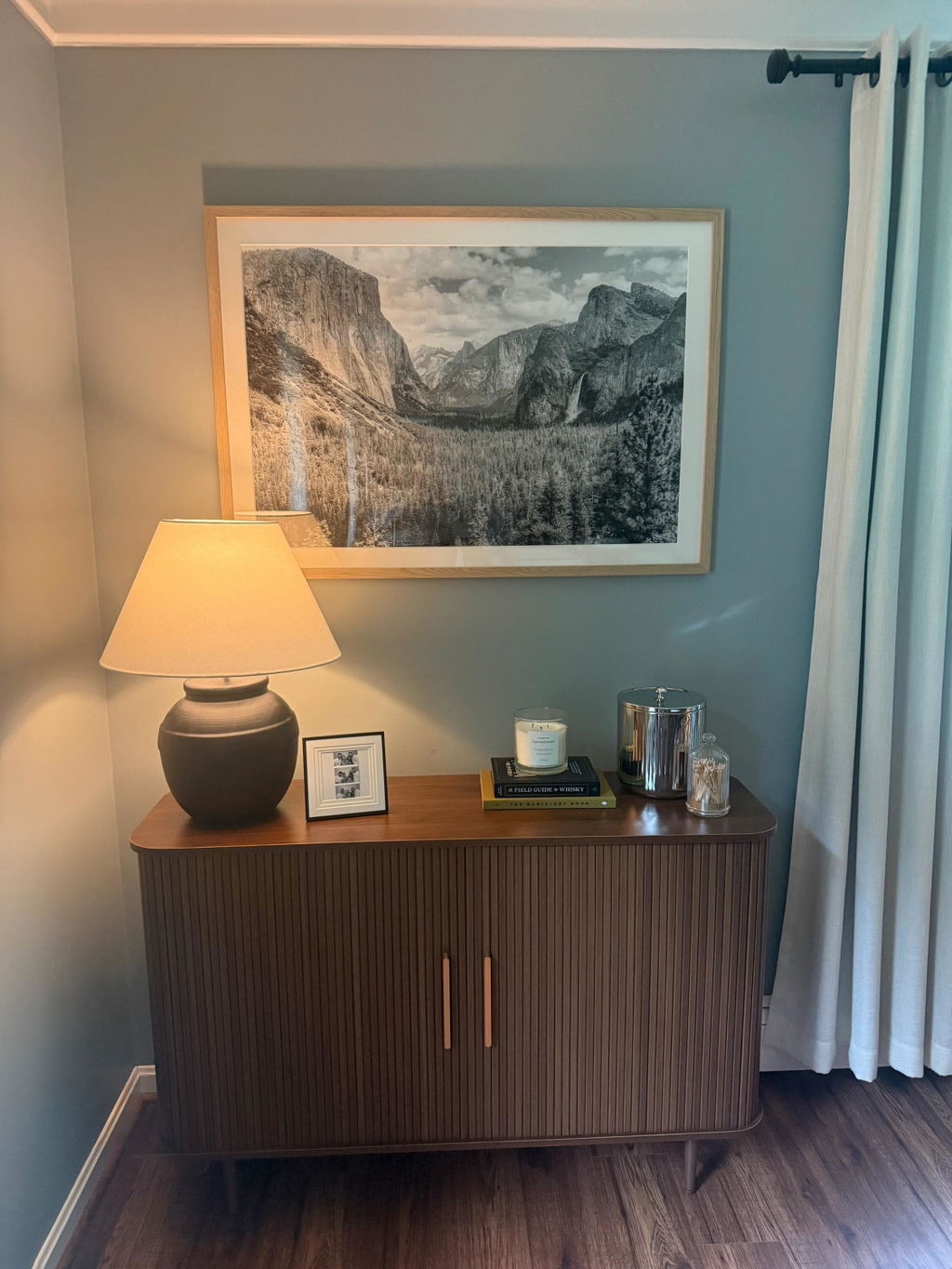
Wide compositions suit this subject better than vertical ones in most cases. Mountain ranges, lift lines, open slopes, these subjects breathe horizontally. For a main wall in a living room or bedroom, 70x100cm is a minimum. For walls wider than 160cm, a two or three-panel set is usually the right answer.
The wall art sets collection has curated winter and mountain options in multi-panel formats. Splitting a wide mountain panorama across two or three prints gives you the scale the subject needs without requiring a single piece that is logistically difficult to ship and hang.
Framing should match the weight of the print. Dark timber and black metal frames suit high-contrast winter photography with strong geometric compositions. Natural timber and off-white frames suit softer subjects: a forest in snow, a mountain at dusk in diffuse light. The forest wall art collection has winter and forest-in-snow subjects if you want something that reads as alpine without being explicitly about ski infrastructure.
For the bedroom, the same principle applies as any other room: choose the calm end of the subject range. A snow-covered ridge at first light, a winter forest, a lift photograph in soft black and white. The guide to styling your master bedroom covers placement and scale decisions for the bedroom wall in full.
On Sizing: The Same Rule, Applied Here
Two-thirds. The combined width of the print or set should be roughly two-thirds of the width of the furniture below it. A 200cm sofa needs 130 to 150cm of photography. A standard double bed needs 90 to 120cm. A narrow mudroom wall often needs a vertical format rather than the wide horizontals that dominate alpine photography.
For the full measuring process, the wall art sizing and hanging guide goes through it in detail.
The best ski wall art does not announce itself as ski wall art. It announces itself as a photograph. The mountain, the lift, the slope in the early morning light. The skiing is context. What you are actually looking at is winter light in a specific place, frozen at a specific moment.
When that is working, a print of a chairlift in heavy snowfall belongs in a city apartment just as naturally as it belongs in a ski lodge.
Browse the mountain wall art collection for the full range of alpine subjects, or start with the Ski Lift horizontal print and the Chairs in the Clouds print to see how the same subject handles differently in each format.
FAQ
What is ski wall art?
Fine art photography of winter mountain environments. At its best, it is strong photography that happens to take place at a mountain rather than ski-themed decoration that happens to be a photograph. The distinction matters: one works in any room, the other works only in rooms where the skiing context is the point.
Does ski wall art work outside ski properties?
Yes. Well-executed alpine landscape photography works in any room where the qualities of the image, open space, winter light, strong composition, suit the space. City apartments often benefit from this subject specifically because it introduces a quality of open space and winter quiet that is difficult to achieve otherwise.
Should ski photography prints be on paper or canvas?
Fine art paper is almost always the better choice for winter and ski photography. Snow has significant tonal detail, and paper holds that detail more accurately than canvas. Canvas texture also competes visually with the fine detail in snow. Paper with archival pigment inks is the standard worth looking for.
Is black and white or color better for ski photography?
Black and white usually performs better for ski and winter subjects. Snow is already close to monochrome, and the visual interest lies in tonal range, texture, and geometry rather than color. Black and white also suits a wider range of interior palettes and does not impose competing colors on the room.
What size ski wall art works for a living room?
70x100cm is a practical minimum for a single print on a main wall. For walls wider than 160cm, a two or three-panel set spanning 120 to 150cm combined is usually more effective. The combined print width should be roughly two-thirds of the furniture width below it.
Where in the home does ski action photography work best?
Action photography suits transitional spaces: mudrooms, entryways, games rooms. These are spaces with high visual energy that can absorb something dynamic. For living rooms and bedrooms, alpine landscape photography with a quality of stillness is the more lasting choice.