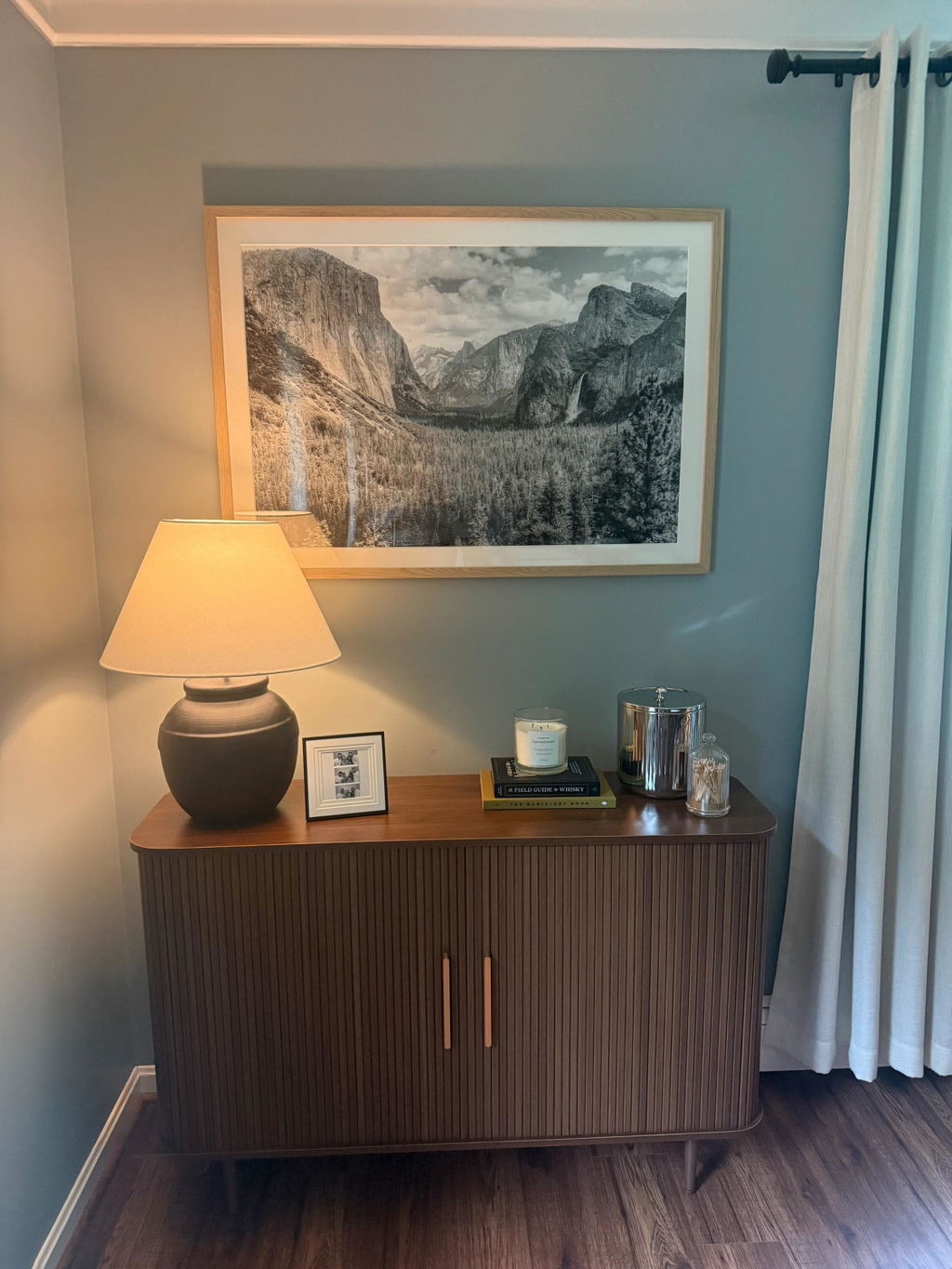
Forest Wall Art: What to Look For Before You Choose
Standing in a room with a large-format redwood print hung well, the space gets quieter. Not literally. But the presence of that much vertical structure, that much canopy light, that much depth in a single image creates a quality of stillness that is genuinely different from any other wall art subject.
That quality is what you are looking for. Not the generic version of it. The specific version.
Most forest photography sold online is technically competent and visually inert. The trees are sharp. The color is accurate. The exposure is correct. And the image does nothing to the room. Understanding what separates one from the other makes the decision faster and the result better.
What Forest Light Does That No Other Subject Replicates
Forest photography at its best is an exercise in captured light. Not landscape light. Not the open drama of a mountain dawn. The interior light of a forest has its own logic, and it is one of the most difficult things to photograph well.
Morning light entering a forest canopy at low angle creates what photographers call dappled light. It is not a poetic description. It is a physical fact: the light filters through leaves and branches, breaks into shafts and spots, lands on the forest floor and the lower trunks in a pattern that changes second by second. A photograph made at the right moment catches that pattern frozen. Twenty minutes later, the scene is completely different.
The visual consequence for a room is warmth and depth simultaneously. A well-exposed forest interior brings light into a space in a way that does not compete with the room's own light. It has its own internal source. Your eye follows the light into the image and keeps going, through the canopy, into the green above. There is no hard edge where the visual experience stops.
This quality is absent in a lot of forest photography that passes as fine art. A flat forest image with even midday light is a document of a forest. A well-made forest image with morning or late-afternoon light is an experience of one.
The forest wall art collection has a range of light conditions and canopy types. Looking through it for images where the light source is doing something specific is the fastest way to understand the difference.
How to Read a Forest Photograph Before Buying
Ask one question before anything else: what did the photographer decide?
Where is the point of entry into the image? Is there a path, a light shaft, a clearing that draws the eye in a particular direction? A composition that lacks this gives the eye nowhere to go. The image becomes wallpaper in the pejorative sense. You look at it once and then it disappears.
For light, trust your instincts. If the light looks flat, it is. If the shadows are rich and directional, if there is visible texture in the bark and duff that tells you the light was low and oblique when the shutter opened, the image was made at the right time. Fog adds something specific: it creates layers of tonal depth by obscuring the far trees slightly and the near ones clearly. A foggy forest photograph has a built-in atmosphere that a clear-sky shot does not.
One more thing: what does the image look like at the very edges of the frame? In a forest interior, what the photographer chose NOT to include matters as much as what was included. Thoughtful cropping, deliberately excluding the sky or the clearing at the base, signals that someone was making decisions rather than documenting.
The Subject Spectrum: Old Growth to Open Woodland
Not all forest photography does the same thing. The subject type determines how the image works in a room.
Old growth forest and redwood subjects bring mass into a space. Trunks the width of a car. The canopy is so high it disappears. The sense of scale in a well-made redwood photograph is almost architectural. These images suit rooms that can absorb visual weight: living rooms with high ceilings, stairwells, offices where seriousness is useful. The Redwoods Path Set of 3 shows how this subject reads when spread across multiple panels at scale.
Open birch and aspen woodland occupies the opposite end of the spectrum. Slender white trunks create vertical repetition without mass. The canopy is thinner. The light quality is airy rather than weighted. These subjects work well in bedrooms and bathrooms where the visual language of the subject matches the room's own qualities.
Pine forest in winter is its own category entirely. The contrast between snow and dark trunks produces images that read almost graphically. In black and white, a snow-covered pine forest becomes a study in pattern and negative space. The black and white wall art collection has winter woodland subjects in this format across a range of light conditions.
Format: The Case for Going Vertical
Landscape photography defaults to horizontal composition. Forest photography often works better in portrait orientation, and this is worth understanding before choosing.
Trees grow up. The visual interest in a forest interior is vertical: from the root system and the duff at the base, up through the trunk, through the canopy, toward the sky. A horizontal crop interrupts this movement before it can develop. A vertical print follows it.
This makes forest photography unusually well-suited to rooms with tall walls, narrow walls between windows, and spaces where a horizontal print would feel wide without purpose. A tall narrow redwood print in a hallway reads completely differently than the same image cropped horizontal and placed above a sideboard.
For multi-panel formats, mixing orientations can work well: two vertical panels of a forest interior flanking a wider panel of the canopy seen from below. The wall art sets collection has curated options across different forest subjects.
For sizing, the standard two-thirds rule applies with one adjustment: forest subjects with strong vertical movement benefit from more height than width. A 70x100cm portrait orientation is a solid starting point for a single print on a main wall. For walls wider than 140cm, a set is almost always more effective. The wall art sizing and hanging guide covers the measuring process in detail.
Color vs. Black and White in Forest Photography
Color forest photography preserves the specific palette of the subject and the season. The green of a live forest in summer light. The amber of a pine forest in autumn. The blue-grey of a foggy redwood morning. When the room can hold the color without conflict, color works and works well.
Black and white removes the palette and leaves the structure. Trunk mass. Canopy pattern. Light quality. Shadow depth. What remains is often more graphic and more permanent than the color version. A black and white redwood photograph on fine art paper reads as an architectural object rather than a nature image. These prints suit rooms where the existing palette is strong or complex, because they do not introduce a competing color.
The honest practical test: if the room has warm wall color, substantial furniture in a specific material, or other artwork that already introduces color, a black and white forest print integrates more cleanly. If the room is relatively neutral and the forest palette is unusual and specific, color earns its place.
Browse the forest wall art collection for subjects across different forest types, light conditions, and print formats. The nature photography collection places forest subjects in the context of the broader category if you want to compare terrain types before deciding.
FAQ
What size forest wall art should I buy?
For a single print on a main wall, 70x100cm in portrait orientation is the practical minimum. Forest subjects with strong vertical movement benefit from more height than width. For walls wider than 140cm, a two or three-panel set is usually more effective than one very large piece.
Does color or black and white work better for forest photography?
Both work, for different reasons. Color preserves the specific palette of the season and light. Black and white clarifies the structure: trunk form, canopy pattern, shadow depth. If the room has a strong existing color or a complex material palette, black and white is the safer choice.
What type of forest subject works best in a bedroom?
Open birch and aspen woodland in soft, diffuse light. These subjects are lighter in visual weight than old growth or pine forest, and the vertical pale trunks have a quality that suits a calm sleeping environment. Avoid high-contrast subjects with dramatic shadow and storm light in a bedroom.
Can forest wall art work in a room with a lot of natural light?
Yes. Well-exposed forest photography on matte fine art paper handles daylight environments well. Matte surfaces do not create reflection or glare issues. The image quality holds across different lighting conditions throughout the day.
Is a large single print or a multi-panel set better for forest photography?
It depends on the wall and the subject. A strong single composition with a clear focal point can anchor a wall as a solo print. A multi-panel set works better when the wall is wide, when the subject benefits from horizontal spread, or when the budget does not stretch to one very large piece.
What makes a forest photograph worth buying?
Intentional composition and specific light. A forest photograph worth buying has a point of entry, a direction for the eye, and light that is doing something particular: morning shafts, late-afternoon warmth, fog. Generic woodland images record a forest. Good forest photography interprets one.